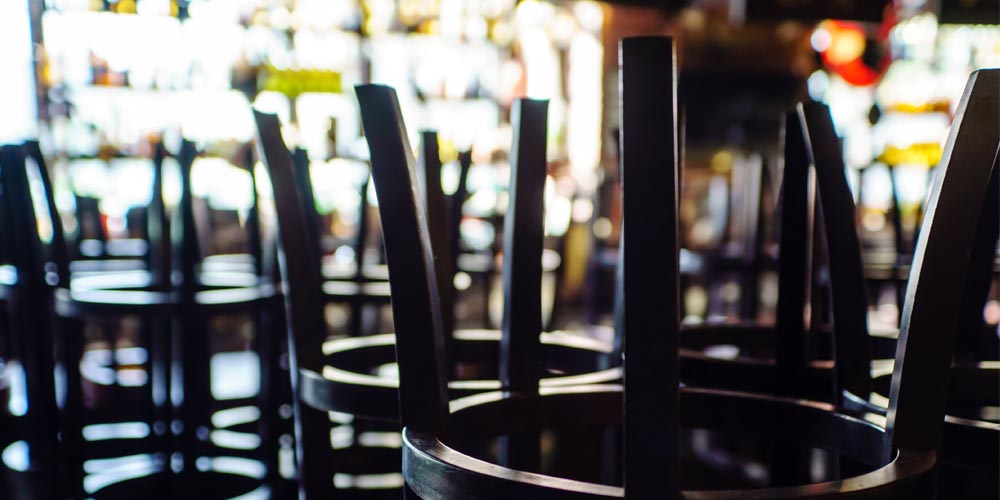
Across the country, bars and restaurants are shutting their doors. Not because customers stopped coming, but because insurance became unaffordable.
In their December 2025 issue, Leader’s Edge magazine interviewed Dr. Robert Hartwig, Clinical Associate Professor of Finance, Risk Management & Insurance at the Darla Moore School of Business at the University of South Carolina. Dr. Harwig noted that liquor liability insurance premiums have surged to historic levels, driven by massive jury verdicts and expanding dram shop liability. In some states, annual premiums have increased 300% to 600%, with small neighborhood bars seeing costs rise from $5,000 to $50,000 or more, regardless of their claim history.
What dram shop laws actually do
Dram shop laws allow injured parties to sue establishments that served alcohol to someone who later causes injury or death, most commonly through drunk driving accidents. Today, 43 states have some form of dram shop statute, though the scope of liability varies widely.
In the most aggressive versions of these laws, establishments can be held 100% financially responsible for damages even if their actual contribution to the incident was minimal.
That risk exposure is the core driver behind today’s liquor liability crisis.
Why premiums are exploding while drunk driving declines
Drunk driving fatalities have declined for decades. In 1991, the rate was about 3.8 deaths per 100,000 people; by 2023, it had fallen approximately 41% to 2.2 deaths per 100,000.
Yet liquor liability premiums are soaring.
The disconnect lies in the courtroom, not the roadway. Over the past decade, juries have issued staggering verdicts against bars and restaurants, including:
- $112.9 million and $831 million verdicts in Texas
- $37.5 million in Illinois
These outcomes have reshaped insurer risk models. When one claim can wipe out years of premium, carriers respond by raising prices, reducing limits, or exiting the market entirely.
In South Carolina, a 2023 Department of Insurance study found insurers lost $1.77 for every dollar of liquor liability premium collected between 2017 and 2022, with combined ratios as high as 360%, an unsustainable business reality.
Joint and Several Liability: the Accelerant
In states with joint and several liability, plaintiffs can collect the full amount of damages from any one defendant, regardless of their actual percentage of fault.
That means a bar could be held financially responsible for a drunk driving accident that occurred hours later and miles away, even when other contributing factors exist.
From a litigation perspective, establishments are attractive targets as they carry insurance limits far exceeding those of individual drivers, whose auto liability policies may cap at $50,000.
This explains why:
- insurers are withdrawing from liquor liability risks
- remaining carriers reduce capacity or impose exclusions
- premiums climb regardless of loss history
Why some states are seeing relief and others aren’t
The severity of the crisis varies dramatically by state.
In the seven states without dram shop laws including Delaware, Kansas, Louisiana, and Virginia, liquor liability premiums are rising, but nowhere near the levels seen elsewhere. These states operate under common law principles that place responsibility on the consumer, not the server.
By contrast, states like South Carolina, Kentucky, Vermont, Texas, and Washington, D.C. face extreme conditions, with dwindling insurer availability and sharply reduced limits.
Tort reform: progress or illusion?
In response to mounting closures, some states have begun introducing reforms.
South Carolina’s Tort Reform and Liquor Liability Act, effective January 1, 2026, lowers the maximum liability threshold from 100% to 50%, requiring juries to assign fault among all parties.
The law also allows establishments to reduce required liquor liability limits by taking specific risk-management steps, including:
- stopping alcohol service at midnight
- requiring approved alcohol server training
- using digital ID verification systems
- increasing the ratio of food sales to alcohol sales
These measures may reduce premiums, but they don’t eliminate exposure.
Lowering policy limits reduces insurance cost, not risk. A verdict that exceeds coverage still lands squarely on the business owner’s balance sheet.
What operators should take away
For bars and restaurants, liquor liability is no longer just another line item. It’s a strategic risk that affects:
- operating hours
- staffing and training
- business model (food vs. alcohol mix)
- long-term survivability
Insurance decisions must now be made in tandem with operational decisions.
That means working with advisors who understand:
- state-specific dram shop laws
- underwriting criteria and carrier appetite
- how risk controls impact pricing and exposure
There is no single fix, but informed planning can mean the difference between staying open and posting a final “last call.”
Not sure if your business has the right coverage? Our team can review your risk exposure and help determine the insurance solutions that make sense for you.
Call (888) 222-7476 or visit www.assetsuregroup.com for a confidential consultation.