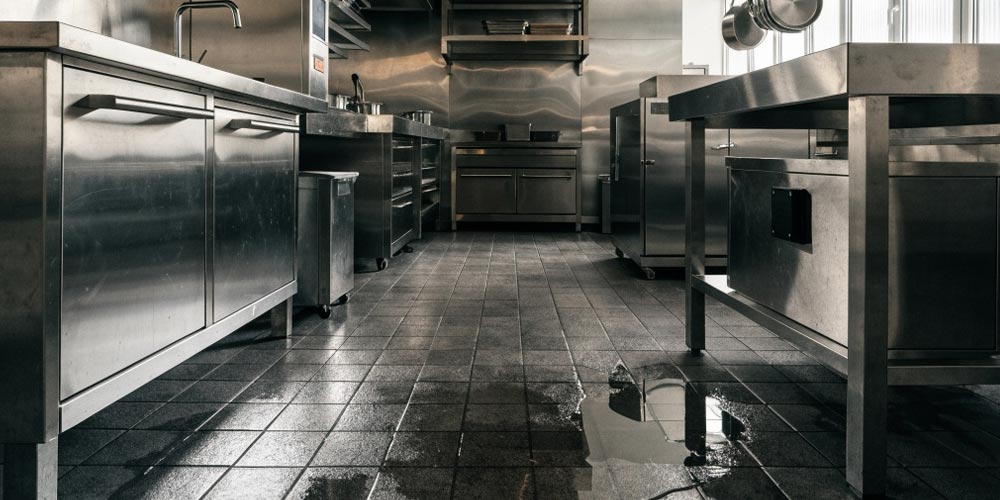
When restaurant owners think about major property losses, fire often comes to mind first. But water damage is one of the most common and potentially disruptive risks facing restaurants.
A water leak can spread behind walls, beneath flooring, and into electrical systems before anyone notices. A single incident can damage equipment, contaminate food, interrupt operations, and force a restaurant to close for repairs.
According to Chubb’s commercial property claims data, non-weather-related water damage is the second-most-common cause of commercial property loss, behind fire.
For restaurant owners, water damage should be treated as a major business risk, not simply a maintenance problem.
Why Restaurants Are Vulnerable to Water Damage
Restaurants rely on many water-connected systems. Kitchens, bars, restrooms, refrigeration equipment, and cleaning operations all create potential points of failure.
Common causes of restaurant water damage include:
- Broken or leaking pipes
- Dishwashers, sinks, and ice machines
- Walk-in refrigerators and freezers
- Water heaters and boilers
- HVAC condensate lines
- Clogged drains and grease buildup
- Sewer and drain backups
- Roof leaks and stormwater
- Sprinkler and fire-suppression systems
These problems can be especially damaging when they occur after closing and go unnoticed for several hours.
Older buildings may have additional risks from aging plumbing, corroded pipes, and outdated drainage systems. Restaurants in leased or mixed-use properties can also be affected by water originating in another tenant’s space or from building systems controlled by the landlord.
What Can Water Damage Cost a Restaurant?
The visible water is often only the beginning. A serious loss can affect nearly every part of a restaurant’s operation.
- Building and equipment:
Water can damage flooring, walls, ceilings, furniture, electrical systems, ovens, refrigeration equipment, HVAC systems, and point-of-sale technology. - Food and inventory:
Water can contaminate food, packaging, preparation surfaces, beverage lines, and ice machines. Affected inventory may need to be discarded, while equipment may require cleaning and sanitizing before reopening. - Mold and cleanup:
Fast cleanup is important after water damage. The EPA recommends drying water-damaged materials within 24 to 48 hours to help prevent mold growth. Sewer backups and contaminated water may require professional remediation. - Lost revenue:
A restaurant may remain closed even after the initial repairs are complete. Equipment inspections, sanitation, food replacement, utility restoration, and other requirements can delay reopening. - Water damage can quickly turn a property claim into a business interruption problem.
Does Restaurant Insurance Cover Water Damage?
This is an important question for every restaurant owner. The answer depends on the source of the water, how the damage occurred, and the terms of the insurance policy.
- Sudden and Accidental Water Damage
Commercial property insurance may cover resulting damage from a sudden event, such as a burst pipe or failed water line. However, the deteriorated pipe or defective component that caused the loss may not be covered. - Gradual Water Leaks
Damage caused by repeated seepage, long-term leakage, corrosion, or inadequate maintenance may be excluded. Regular inspections and maintenance can help identify problems before they become major losses. Keeping maintenance records can also be valuable when a claim occurs. - Flood Insurance
Water entering a building from surface water, storm surge, or an overflowing body of water is generally excluded from standard commercial property insurance. Separate commercial flood insurance may be necessary depending on the restaurant’s location and exposure. Restaurant owners should evaluate their actual flood exposure rather than relying only on a flood-zone designation. - Sewer and Drain Backup
Sewer or drain backup may require a specific insurance endorsement with its own limit and deductible. Review your restaurant insurance policy to understand whether this coverage is included and whether the limits are appropriate. - Equipment Breakdown and Spoilage
Restaurants depend heavily on refrigeration and other equipment. Equipment breakdown insurance may cover certain mechanical or electrical failures involving refrigeration systems, boilers, and other essential equipment. Spoilage coverage may help protect food and beverage inventory lost because of a covered equipment failure or temperature change. Limits should reflect the restaurant’s maximum inventory, particularly during holidays and other peak periods. - Business Interruption Insurance
Business interruption insurance, also called business income coverage, can be an important part of restaurant insurance. When a restaurant must temporarily close because of covered property damage, business income coverage may help replace lost income and certain continuing expenses. Extra expense coverage may also help pay costs that allow the restaurant to reopen more quickly, such as temporary equipment or expedited repairs.
Restaurant owners should ask:
- How was my business income limit calculated?
- Is there a waiting period?
- Are payroll expenses included?
- How long will coverage continue?
- Are utility service interruptions covered?
- What happens if damage starts somewhere else in the building?
Understanding these details before a loss can help prevent unexpected coverage gaps.
How Can Restaurants Prevent Water Damage?
Insurance is important, but prevention and maintenance are also key parts of restaurant risk management.
- Inspect plumbing and equipment
Regularly inspect pipes, hoses, valves, dishwashers, ice machines, sinks, water heaters, and refrigeration equipment. - Maintain drains and grease systems
Keep floor drains, roof drains, grease traps, and sewer lines clear. Address recurring slow drains before they become larger problems. - Install water leak sensors
Place sensors near high-risk areas such as water heaters, refrigeration equipment, restrooms, and dishwashers. Connected systems can alert managers when a leak occurs. - Know the water shutoffs
Managers and designated employees should know where shutoff valves are located and how to use them safely. - Review your lease and maintenance responsibilities
Understand who is responsible for plumbing, roofs, drains, sprinkler systems, and shared building equipment. - Keep maintenance records
Document inspections, repairs, equipment servicing, and drain cleaning. Good records can help demonstrate that reasonable steps were taken to maintain the property.
What Should a Restaurant Owner Do After Water Damage?
If water damage occurs, acting quickly can help reduce the size of the loss.
- Protect employees and customers from electrical hazards and contaminated water.
- Stop the source if it can be done safely.
- Notify the building owner and insurance company.
- Photograph and document the damage.
- Begin professional water removal and drying.
- Track repair costs, spoiled inventory, lost sales, and other expenses.
- Consult local health authorities before reopening if food or water systems were impacted.
Protect Your Restaurant From Water Damage
Water damage may not be as dramatic as a fire, but it can be just as disruptive. It can affect a restaurant’s building, equipment, inventory, food safety, and revenue at the same time.
The best approach combines proactive risk management with an insurance program designed around the restaurant’s actual exposures.
At AssetSure Group, we help restaurant owners review their restaurant insurance coverage, identify potential gaps, and develop risk management strategies designed to protect their businesses.
If you own or operate a restaurant, now is a good time to review your property insurance, business interruption coverage, equipment breakdown coverage, and other protections.
Not sure whether your restaurant insurance provides the protection you need? AssetSure Group can help you review your coverage and identify potential gaps before a loss occurs.
Call (888) 222-7476 or visit AssetSureGroup.com for a confidential consultation.